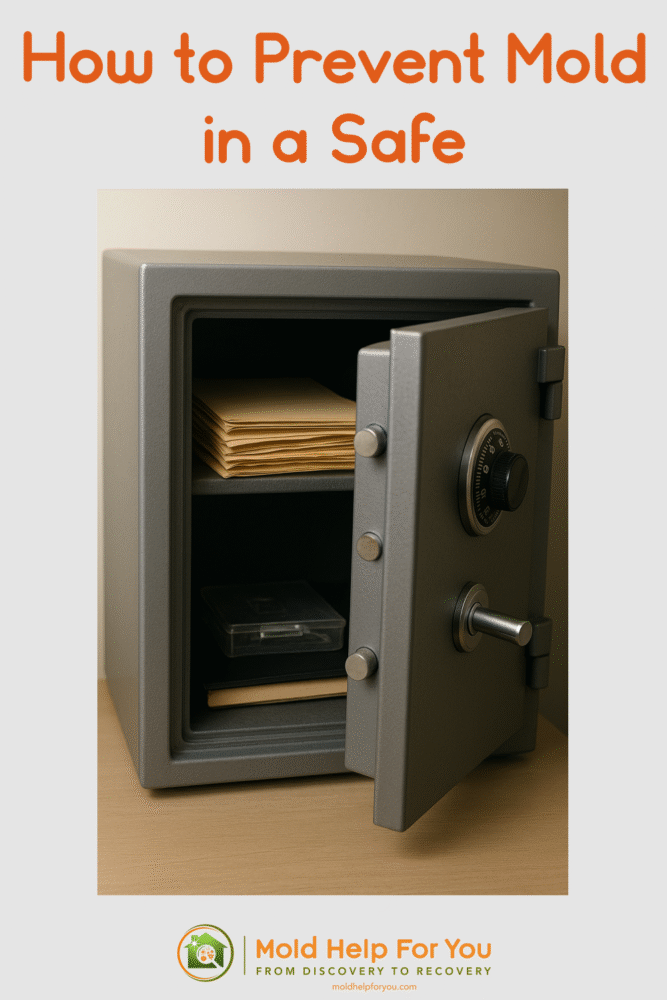
How to Prevent Mold in a Safe
This post may contain affiliate links. Read our full disclosure.

Mold can be a serious issue, especially when it comes to keeping valuables safe and secure. In a safe, darkness and a tightly sealed environment provide perfect conditions for mold growth, which can be harmful to delicate and irreplaceable items stored inside. Therefore, it is essential to know how to prevent mold from developing in the confined spaces of a safe.
What Causes Mold in a Safe?
Mold in a safe is primarily caused by excess moisture and humidity. When the air inside the safe becomes damp, it creates an ideal environment for mold to grow. Mold spores can rapidly multiply under the right conditions, and once it takes hold inside a safe, it can be difficult to remove completely.
One of the main factors contributing to mold growth in a safe is inadequate ventilation. Safes are designed to be air-tight for security reasons, which can inadvertently trap moisture inside. The lack of air circulation prevents the safe’s contents from drying out, leading to humidity buildup and eventual mold growth.
Another factor is the type of items stored inside the safe. Some materials, such as paper documents or paper money, can act as a food source for mold, enabling it to grow and spread rapidly. If these items become damp or are exposed to high levels of humidity, they can become breeding grounds for mold and mildew. In addition, some of these items already carry a mold spore load and once they are placed in a safe, a chain reaction begins.
How to Prevent Mold in a Safe
To address the issue of mold in a safe, it is essential to consider the following preventative measures:
- Regularly airing out the safe
- Using moisture absorbing products
- Ensuring proper storage of items in the safe
Let’s take a closer look at each of these preventative measures.
Air Out
Open the safe once a month and leave it open for a while, allowing fresh air to circulate and moisture to dissipate. If you have an air purifier, run it next to the safe while it is airing out or better yet, take the safe outside if it can be moved. A good rule of thumb is that for every week a safe has been closed up, let it air out for an hour.
Absorb Moisture
To prevent mold growth in safes, maintain a stable humidity level. Utilize moisture-absorbing materials and replace them at least every six months or according to the manufacturer’s instructions.
Proper Storage
Avoid storing highly absorbent materials or items already suffering from mold or mildew, as this can aggravate the issue and expedite the growth of mold inside the safe.
Dry all documents and items thoroughly before placing them inside the safe.
Use acid-free parchment paper or polyethylene bags to store valuable documents, as these materials do not encourage mold growth. I like these fire proof bags and use them myself.
To maintain a mold-free environment inside the safe, consider using moisture-absorbing products. An inexpensive and effective option is to place a small jar filled with cat litter inside the safe, which can help absorb moisture and inhibit mold and mildew formation. Replace the cat litter every four to six months for optimal effectiveness. This cat litter is hands down the best for this use.
Another option is to use baking soda as a natural mold prevention agent. Scatter a few tablespoons of baking soda on a small plate or bowl and place it inside the safe. Baking soda absorbs moisture and helps maintain a dry environment, preventing mold growth. Replace the baking soda every two to three months to ensure its efficacy.
Finally, consider using commercial mold control products designed specifically for safes and enclosed spaces. These products come in various forms, such as desiccant packs, silica gel canisters, and moisture-absorbing crystals, and can help maintain a dry, mold-free environment for your valuables. Some of my favorite products are:
- Wisedry reusable silica gel packs
- Zarpax activated charcoal moisture absorbers
- Eva-Dry wireless mini dehumidifier
Securing and Storing Valuables in a Mold-Free Safe
When selecting a safe for storing valuables, such as coins, firearms, and documents, it is crucial to consider the factors that can help prevent mold growth. Opt for safes made with materials that resist mold and mildew and ensure the safe has an airtight seal to keep high humidity out. Place the safe in a dry area of your home and avoid high humidity areas, such as basements.
Coins, firearms, and documents should be stored in airtight containers or the fire proof bags I mentioned before placing them in the safe. This extra precaution can help preserve the items and minimize the risk of mold damage. Additionally, make sure the items are dry before storing them to further prevent mold growth.
While I have not done a comparison of the brands of safes available, I do know that Sentry safes have a very good reputation in so far as being less prone to mold growth.
Cleaning Techniques
It is a good idea to clean the inside of your safe once a year.
One effective method to eliminate the rogue mold spores is by cleaning the safe using a hypochlorous acid cleaner. My go-to is Superstratum Building Cleaner as it is a 600ppm HE-HOCL formula that I liken to the superhero of mold removal.
- Apply Superstratum to the inside of the safe using a cloth, sponge, or brush. It can also be sprayed on directly.
- Allow it to sit for a few minutes to break down the mold spores or other biotoxins.
- Scrub the area.
- Wipe it down with Superstratum once more and dry it thoroughly.
If you want to take things a step further and really help prevent mold, dampen a cloth with Superstratum Endurance Coating and apply it all over the inside of the safe. Allow it to dry before placing items back inside.
My Safe Still Has a Musty Odor. Now What?
Good news. There is a way to fix this! Grab a 25g Deodor Bomb from Superstratum and let the magic of chlorine dioxide remove any offensive odors that might linger. Follow the instructions that come with the bomb and in 12 hours your safe will smell better than the day you bought it. I have had clients use a Deodor Bomb in a safe with everything still in it. I personally suggest removing everything unless sensitive items are secured in airtight containers.
These tips and tricks will help keep your valuables secure and prevent mold growth inside your safe. Remember – storing paper money causes that “funky safe smell” that many people associate with mold. Money is typically quite moldy so storing paper currency can be a risk. I always suggest you have a dedicated safe for paper currency.